
First National Security Mission on Vulcan Rocket
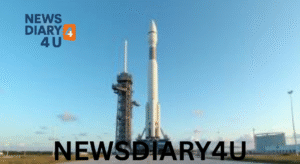
Launch Preview: ULA Set to Launch First National Security Mission on Vulcan Rocket United Launch Alliance (ULA) is stepping into a new era of space exploration and defense as it gears up for the first national security mission aboard its brand-new Vulcan Centaur rocket. The mission, set to lift off from Cape Canaveral Space Force Station, represents a pivotal milestone for both ULA and the United States Space Force (USSF), signaling the arrival of a next-generation launch system designed to handle the nation’s most critical payloads.
A New Chapter for ULA and National Security
The Vulcan rocket is not just another addition to the growing fleet of American launch vehicles. It’s a product of years of engineering innovation, built to replace ULA’s workhorse Atlas V and Delta IV rockets. With this launch, ULA aims to prove the Vulcan’s capabilities in delivering sensitive and high-value national security assets to orbit.
National security launches are not your average space missions. They require extreme precision, rigorous testing, and fail-proof performance. The stakes are high—these payloads often support military communications, missile detection, and global surveillance systems vital to U.S. defense operations.
Mission Details and Timeline
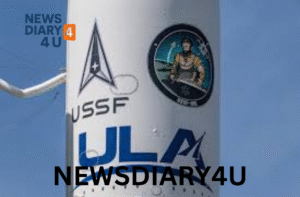
According to ULA, the mission—designated USSF-X—will carry a classified payload for the United States Space Force. While specific details about the cargo remain under wraps (for obvious security reasons), the launch profile involves placing the payload into a high-energy orbit.
The current launch window is set for the coming days, weather permitting. The Space Launch Delta 45 team is closely monitoring conditions at Cape Canaveral, with forecasts suggesting a high probability of favorable weather. In case of any delays, backup windows are already in place.
The Vulcan Centaur’s first stage is powered by two BE-4 engines built by Blue Origin, while the Centaur upper stage will handle the precision delivery to orbit. This combination is designed for high efficiency, delivering heavy payloads with pinpoint accuracy.
Why This Launch Matters
This mission is more than a debut—it’s a strategic shift in America’s space launch capabilities. By moving to the Vulcan platform, the U.S. gains a launch vehicle that uses domestically produced engines, reducing reliance on foreign suppliers. This aligns with national policy goals for securing the U.S. space supply chain.
For ULA, the mission is an opportunity to demonstrate that the Vulcan can handle the rigorous demands of military and intelligence community customers. A successful launch will pave the way for more national security contracts and solidify Vulcan’s role in the coming decade.
The Road to Vulcan’s First National Security Launch
Developing the Vulcan wasn’t without challenges. Engine testing delays, integration adjustments, and the global supply chain crunch all pushed back its debut. However, earlier in the year, the Vulcan completed a flawless commercial test mission, giving engineers and mission planners confidence ahead of this national security flight.
Mark Peller, ULA’s vice president for Vulcan Development, noted in a recent statement:
“This launch is the culmination of years of dedication by our team and partners. We are confident Vulcan will deliver for our national security customers.”
The Future of National Security Launches
If the Vulcan’s first national security mission is a success, ULA will have a busy future ahead. The Space Force and other government agencies have a steady queue of missions requiring advanced launch capabilities. Vulcan is designed to be more cost-effective and adaptable than its predecessors, making it competitive in an increasingly crowded market that includes SpaceX’s Falcon Heavy and the upcoming Blue Origin New Glenn.
The U.S. space defense strategy is evolving to counter new threats, from anti-satellite weapons to cyberattacks. Having a reliable, rapid-response launch system like Vulcan ensures that the country can maintain an edge in space—a domain that’s becoming as strategically important as land, sea, and air.
Final Countdown
As ULA prepares for liftoff, the mission represents a symbolic and practical leap forward. For the engineers, scientists, and military personnel involved, this launch is the payoff for years of work. For the public, it’s a reminder that behind every rocket launch lies a network of innovation, security, and national pride.