
Rocket Lab Launches Five Satellites for Undisclosed Commercial Customer in Latest Mission

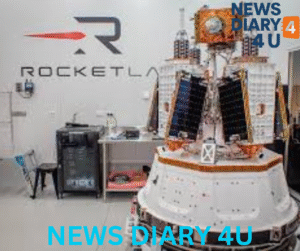
Rocket Lab has added another milestone to its growing list of space achievements. In its latest mission, Rocket Lab launched five satellites into orbit for an undisclosed commercial customer, proving once again that it is one of the most dependable names in the small satellite launch industry. While the identity of the customer and details of the payload remain confidential, the successful launch highlights Rocket Lab’s reliability, innovation, and increasing role in the future of commercial space travel.
A Mission Wrapped in Secrecy
Unlike many high-profile launches where companies proudly showcase their payloads, this mission stood out because of its confidentiality. The undisclosed commercial customer opted to keep details private, fueling curiosity across the space community.
There are several reasons why companies prefer anonymity. Some are developing competitive technologies they want to shield from rivals. Others are working on sensitive research projects, or their operations might involve government or defense partnerships that require discretion. Regardless of the motive, Rocket Lab’s ability to handle secretive missions adds another layer of credibility to its services.
The only confirmed detail was that five satellites were successfully delivered into low Earth orbit (LEO). For Rocket Lab, this achievement is not just about numbers—it is about trust. When businesses invest millions in satellite development, they want a launch provider that guarantees both confidentiality and precision. Rocket Lab has proven it can deliver both.
Why “Rocket Lab Launches Five Satellites” Matters

At first glance, the headline may sound simple. But behind the phrase “Rocket Lab launches five satellites” lies years of research, engineering breakthroughs, and operational excellence.
Each satellite represents countless hours of development by the customer’s team. Getting those satellites into orbit requires flawless execution, from rocket design and manufacturing to countdown procedures and in-orbit deployment. Rocket Lab has built its reputation by perfecting these details.
Key reasons customers choose Rocket Lab include:
-
Reliability: A growing portfolio of successful missions reinforces client confidence.
-
Frequent Launch Opportunities: Customers don’t need to wait years for a launch slot.
-
Dedicated Service: Unlike rideshare missions on larger rockets, Rocket Lab offers dedicated launches, allowing precise orbital delivery.
-
Cost-Effectiveness: Its Electron rocket provides a budget-friendly solution compared to heavy-lift competitors.
These qualities make Rocket Lab the launch provider of choice for both public and private clients worldwide.
The Small Satellite Revolution

The successful deployment of five satellites reflects the broader transformation taking place in the space industry. Satellites are getting smaller, smarter, and more capable. Instead of relying solely on large, expensive spacecraft, companies are building constellations of compact satellites to achieve global coverage.
Applications for small satellites include:
-
Earth Observation: Tracking environmental changes, monitoring natural disasters, and supporting agriculture.
-
Communications: Powering internet services, especially in remote areas.
-
Navigation: Enhancing GPS precision and enabling autonomous systems.
-
Defense and Security: Supporting surveillance and tactical operations.
Rocket Lab has positioned itself as a leading player in this small satellite revolution. By making launches affordable and frequent, it has opened the doors of space to startups, universities, and private companies that might not have had the budget or opportunity to reach orbit in the past.
Electron: The Workhorse of Rocket Lab

The success of this mission once again demonstrates the capability of Rocket Lab’s Electron rocket. Designed specifically for small payloads, Electron stands out from competitors by offering dedicated launches rather than relying on shared rides.
Key features of Electron include:
-
Payload Capacity: Can carry up to 300 kilograms to low Earth orbit.
-
Precision: Allows satellites to be placed into customized orbits.
-
Reusability Efforts: Rocket Lab has been testing ways to recover and reuse Electron’s first stage, reducing costs over time.
Electron is not just a rocket—it is Rocket Lab’s gateway to becoming a global leader in commercial spaceflight. Its success has paved the way for future advancements, including the development of Neutron, a larger rocket designed for heavier payloads and human spaceflight.
The Significance of Undisclosed Missions
Some might wonder why customers choose to stay anonymous. In today’s competitive technological landscape, secrecy can be just as important as innovation.
-
Competitive Advantage: Protecting intellectual property from rivals.
-
National Security: Defense-related missions often require confidentiality.
-
Experimental Technology: Customers may not want publicity until systems are tested successfully.
Rocket Lab’s ability to accommodate undisclosed missions shows its flexibility. Whether clients want media coverage or complete discretion, Rocket Lab provides tailored services.
Rocket Lab’s Growing Influence
Each mission adds to Rocket Lab’s credibility. Beyond its launch services, the company has expanded into satellite manufacturing and space systems development, providing end-to-end solutions. Its long-term vision includes enabling space-based infrastructure, such as satellite constellations for communications, climate research, and defense.
By successfully delivering five satellites for a secretive client, Rocket Lab demonstrates it is not just a launch provider—it is a trusted partner for the future of space innovation.
The Future: Neutron and Beyond
While Electron is Rocket Lab’s current star, the company is already working on its next big leap: the Neutron rocket. Neutron is designed for heavier payloads, with the potential to support crewed missions and larger satellite constellations. This development could put Rocket Lab in direct competition with giants like SpaceX.
Still, Electron will continue to serve as the company’s bread and butter for small satellite launches. With every mission, Rocket Lab builds on its expertise, positioning itself as one of the few companies capable of balancing affordability, confidentiality, and precision in commercial spaceflight.
Final Thoughts
The headline “Rocket Lab launches five satellites for an undisclosed commercial customer” may sound straightforward, but the mission itself represents much more. It is a story of trust, innovation, and the changing face of the space industry.
By successfully executing confidential launches, Rocket Lab proves its ability to cater to a diverse range of clients. Whether the payload is a high-profile communications satellite or a secretive experimental project, Rocket Lab has shown it can deliver.
As the demand for small satellite launches continues to grow, Rocket Lab is not just keeping pace—it is setting the standard. The company’s mix of reliability, innovation, and customer trust ensures it will remain at the forefront of commercial space exploration for years to come.


