
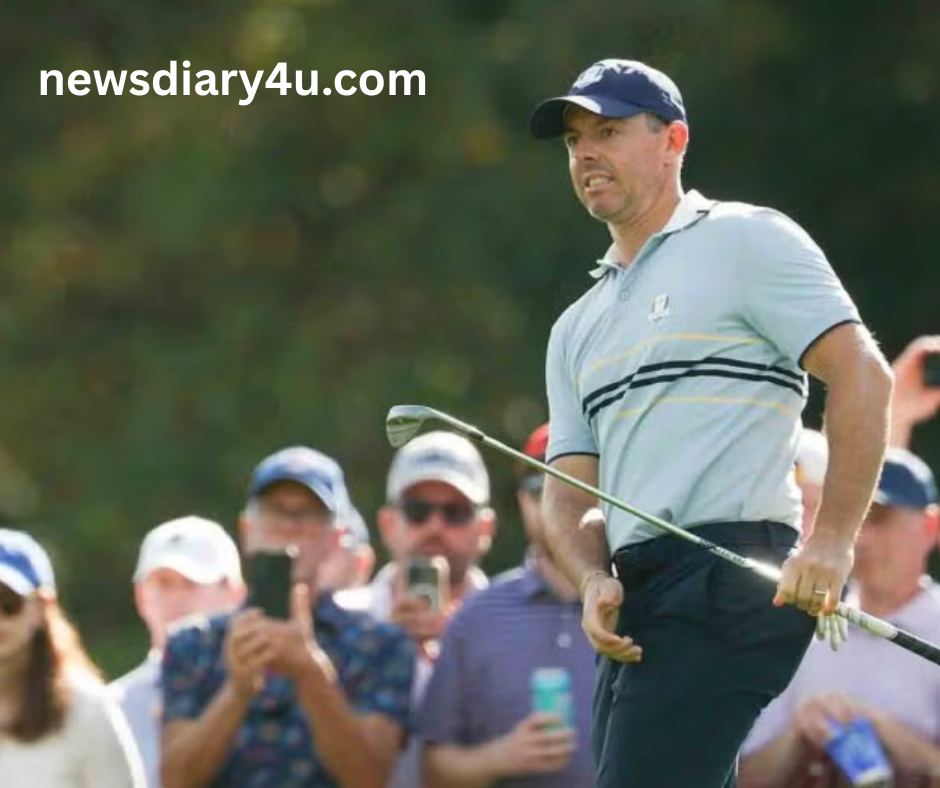
Rory McIlroy vs the Crowd: When Silence Meets Fury I2025 Ryder cup n the charged air of Bethpage Black during the 2025 Ryder Cup, Rory McIlroy made headlines — not just for his golf, but for his words. As boos and jeers echoed from the stands, McIlroy snapped during one critical moment, telling the disruptive fans to “shut the (expletive) up.”
The moment was raw, human, and unmistakably revealing. It showed a champion pushed to his limits, one who expected respect while coping with relentless taunts. Amid the drama, he locked in a superb shot and, in that action, reminded everyone why pressure and performance often go hand in hand.
Let’s unpack what led to this moment, what it says about McIlroy the person (not just the player), and what it reveals about sport, crowd dynamics, and mental limits.
The Build-Up: A Hostile Atmosphere
A Charged Venue
Bethpage Black has always demanded focus. But this year, the venue also brimmed with tension. The American crowd came in loud, partisan, energized — some might say aggressive. Collin Morikawa, the U.S. captain, even urged fans to bring “absolute chaos” to the event.
European players and observers had warned of this before the tournament began. Rory himself spoke about the delicate balance of engaging with the crowd without letting it break your concentration.
By the second day, that charged energy overflowed. Spectators were ejected, officials scrambled to quiet sections of the course, and the boundary between passionate support and abusive heckling blurred.
Personal Attacks and Escalating Barbs
McIlroy, already one of Europe’s most scrutinized stars, drew particular focus from the crowd. Some taunts targeted his appearance, his relationships, even his protein bar choices. Insults about his shirt buttons, his personal life, and jibes directed at his family filtered into match play.
This kind of verbal assault does more than distract; it chips away at composure, adds emotional load, and spreads tension throughout a competitor’s internal landscape. McIlroy, ultimately, reached a tipping point.
The Moment of Outburst
What Happened
During the Saturday morning foursomes, McIlroy stood in the rough on the 16th hole with a shot to make. As he prepared, the crowd’s raucous chanting and audible interjections wouldn’t relent. McIlroy backed off his intended swing and faced the fans, telling them to “shut the (expletive) up.”
Television mics caught it all. Then, with the moment still thick, McIlroy refocused. He hit his approach shot to about three feet. His partner, Tommy Fleetwood, drained the birdie putt, sealing their 3-and-2 win over Collin Morikawa and Harris English.
Notably, this was not the only charged exchange. Later in the day, in a fourball match, McIlroy and Shane Lowry encountered more shouting. At one point McIlroy refused to putt until the crowd quieted. Then he buried an 11-foot putt once order returned.
Lowry, too, lost his composure briefly, directing a two-word expletive back at a fan after earlier taunts.
Why It Matters
To many, a pro athlete scolding a fan might seem out of bounds. But in high-stakes sport, tension often lives in those crossing lines. McIlroy’s outburst struck because it felt raw and personal — not scripted. It showed the emotional toll of constant provocation.
It also illuminated a boundary few talk about: up until what point is spirited fan behavior acceptable? And when does it cross into disrespect that undermines the fairness of performance?
In that moment, McIlroy tried to reclaim agency. He demanded a semblance of respect during play. And then he followed it up with a shot worthy of the spotlight.
Behind the Tempest: Humanizing Rory
In moments like this, the human behind the icon emerges.
Strength Under Strain
McIlroy’s record is built on composure and excellence. Yet behind the trophies and quiet confidence lies someone who feels — deeply. Carrying public expectations, personal pressures, and now the weight of crowd aggression, he had to draw on internal reserves. The verbal blow wasn’t a lapse; it was a boundary asserted under duress.
He later said he didn’t begrudge fans’ criticisms. He knows aggression and taunting come with the territory of an away Ryder Cup. But his demand was simple: give us the chance to play. Not endless distraction.
Rory McIlroy has long been a golfer many admire: talented, personable, ambitious. Yet as public figures go, he also lives within the amplifiers of comment, rumor, and expectation. Try as he might to stay centered, there are running currents of external pressure — from sponsors, media, and fans — pulling at his identity.
That moment of anger recalled a simple truth: even elite athletes carry emotional thresholds. Pressure, combined with perceived disrespect, can provoke a reaction no performance alone can bury.
Redemption Through Performance
The leftover narrative is not just about the curse. It’s about how he responded afterward — by delivering. That shot on the 16th, then holding firm in the face of further agitation on later holes, showed that anger didn’t derail him. He turned it into resolve.
In sport, redemption often comes through action, not apology. McIlroy welded his message and his method: demand fairness, then prove he belongs.
Reactions and Fallout
What Officials Did
Tournament officials stepped in multiple times. Some spectators were ejected for bad behavior. Security was bolstered. Messages of etiquette and respect flashed on screens. But those efforts often came reactively, amid escalating tension.
Some criticized the PGA or U.S. organizers for tolerating the toxicity too long. Others defended fans as passionate and thick-
Fans and Media
Social media exploded with mixed reactions. Some called McIlroy unprofessional. Others applauded him for refusing to be bullied. The press labeled the moment among the most controversial in recent Ryder Cup history.
Some media outlets framed it as a breakdown. But many deeper takes recognized a man under siege, fighting to protect his focus. The narrative polarized — but also opened conversation.
Implications for the Game
The episode raises broader questions for golf and sport:
-
Should stricter enforcement exist to prevent verbal harassment during play?
-
How should officials calibrate protecting players versus preserving fan energy?
-
Can top athletes be more vulnerable in the public eye than fans imagine?
Lessons Beyond the Tee
The McIlroy moment resonates beyond golf. It speaks to how we respond when pushed past respect, when emotional limits crack, and when we must reassert dignity while staying functional.
1. We all carry thresholds. Even people perceived as “strong” reach a tipping point when provoked repeatedly.
2. Boundaries and consequences matter. Saying “this is unacceptable” is not weakness; it can be necessary.
3. The comeback determines the legacy. How you perform after a misstep tells more than the misstep itself.
4. Empathy bridges perspective. The crowd, also human, feels the adrenaline of home advantage — but when it becomes abuse, empathy should restrain it.
McIlroy’s cry for quiet wasn’t mere rage — it was a request to be heard and allowed to compete.
Looking Ahead: What Comes Next
As Sunday’s singles loomed, Europe carried a commanding lead — 11½ to 4½ — needing only a few points to reclaim the Cup on U.S. soil.
But the volatility of crowd dynamics remains. Will Sunday yield more confrontations? Or will the spectacle mellow as the outcome becomes more certain?
For McIlroy, the legacy from today’s showdown may linger. Rather than a flash of temper, it may become a turning point in how fans, officials, and players negotiate the fine line between passion and respect.
And for observers, it serves as a reminder: even icons, legends, superstars, must navigate emotion, friction, and humanity.
If you like, I can polish this furher (add quotes, interviews, alternate structures) or produce a shorter version for publication. Do you want me to refine it or send you the HTML version ready for your website?